Customer Service Track an Order Contact Us

Cart is empty.

The AquaVoxel frag rack launches soon.

Sign in for order tracking, saved builds, and reorder history.

Sign In Create Account
WHY AQUAVOXEL

Most frag racks are an afterthought. Ours is engineered.

Most frag racks are flat plastic slabs with holes drilled in them. They block light, choke flow and tip over. AquaVoxel is a precision-engineered coral management system built around a twist-lock plug, an open hexagonal framework, pointed legs that sink into sand or gravel, sealed magnetic mounts, and corner plates and tiers for every size. It’s designed to protect your coral investment and keep your tank clean and healthy.
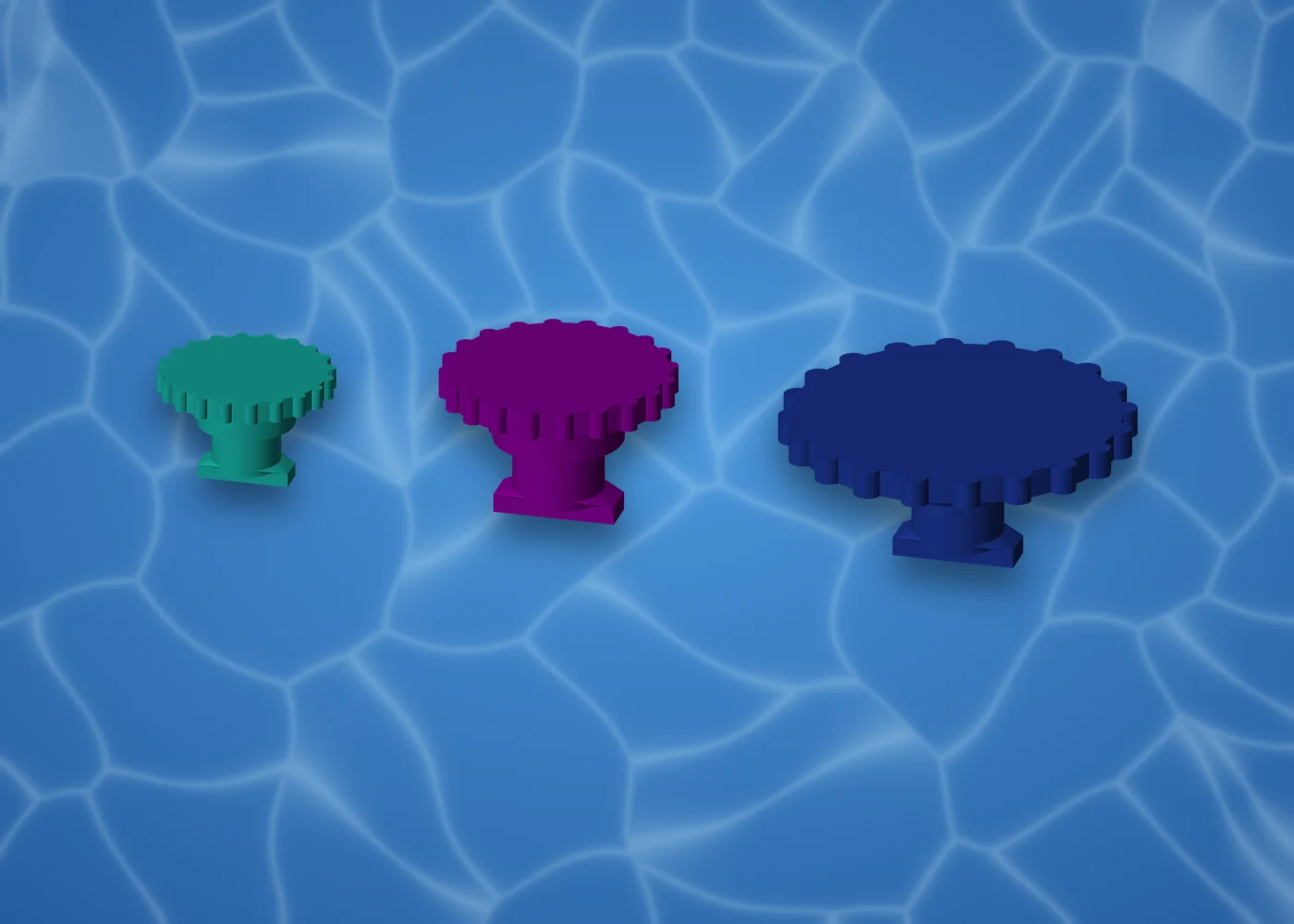
90°twist locks a plug in place
0.65 mmradial plug-to-socket clearance
25–85 mmpointed legs, plus 20 mm tier brackets
1,764frags in one linked 8 ft raceway
AquaVoxel twist-lock frag plugs in three sizes
19.05, 25.4 and 38.1 mm twist-lock plugs
ADVANTAGE 01

The zero-drop twist-lock plug

A quarter turn seats and locks every plug. Frags stay where you put them until you decide to move them.

  • Locked against current and crabsA 90° twist mechanically locks the plug against strong current, powerful wavemakers and curious clean-up crews.
  • Light plugs, locked downPlastic plugs weigh only a few grams, which is why strong flow knocks them loose. Ours are locked in with a quarter turn, so their weight doesn’t matter.
  • No chips, no gritPETG plugs don’t chip, crumble or shed grit the way low-grade ceramic can, and they don’t break down in saltwater.
  • Texture, not calciumCeramic plugs are often sold on their calcium content, but corals build their skeletons from the calcium in your tank water, not from the plug beneath them. What a frag needs from a plug is a rough surface for its tissue to grip and encrust, and every AquaVoxel plug has a textured top.
  • Out without disturbing a thingTo move, sell or dip a coral, twist back and lift straight up. No prying a swollen plug, no knocking over the frag next door.
  • No glue, no O-ringsPlugs hold without glue in the socket or rubber O-rings that wear, tear and collect bacteria over time.
  • Ships uprightSelling frags? Lock the plug into an AquaVoxel shipping float and the coral hangs submerged below it in the bag, whichever way the box ends up.
  • No lock-inSelling or trading a frag? Clip the two locking ears off the plug and it becomes a standard-rim plug that fits any traditional acrylic rack or eggcrate.
Solid slab rack compared with the AquaVoxel open lattice: water and light pass through the lattice, while a slab leaves a shaded dead zone underneath. SOLID SLAB RACK AQUAVOXEL OPEN LATTICE dead zone:shade + settled detritus flow and light reach every level
Illustration: side view of a solid slab rack and an AquaVoxel plate
ADVANTAGE 02

An open hexagonal framework that water and light pass straight through

Solid slab racks act like sails. AquaVoxel plates are mostly open space.

  • Fewer detritus trapsSolid plastic and acrylic slabs create still zones underneath where organic waste settles, and trapped detritus is a common factor in coral tissue loss. The open lattice lets water move through the plate from every angle.
  • Flow across every fragCurrent keeps moving across coral tissue, supporting polyp extension, waste removal and nutrient uptake.
  • Light reaches the lower levelsThe slim framework casts far less shadow than a solid slab, so the space below the rack stays usable.
  • Grows with youConnectors join plates edge to edge or four at a corner, from a single nano plate to a rigid commercial raceway of 1,500+ frags, without moving a settled coral. See commercial systems.
A flat-footed rack rests on top of the sand and flattens it; an AquaVoxel tapered leg passes through the sand to the bottom glass. FLAT FEETTAPERED AQUAVOXEL LEG bottom glass sits on the sand, can rock; compacts the sand under each foot tips rest on the glass ยท sand stays open
Illustration: flat feet compared with tapered legs
Three AquaVoxel plates set at 45, 35 and 25 mm leg heights, stepping down from the light. REEF LIGHT 45 mm legshigher light: SPS 35 mm legs 25 mm legslower light: LPS
Illustration: three leg heights stepping plates toward or away from the light
ADVANTAGE 03

Pointed legs that sink in and stay level

Flat-footed racks sit on top of the sand bed and wobble. AquaVoxel legs go through it.
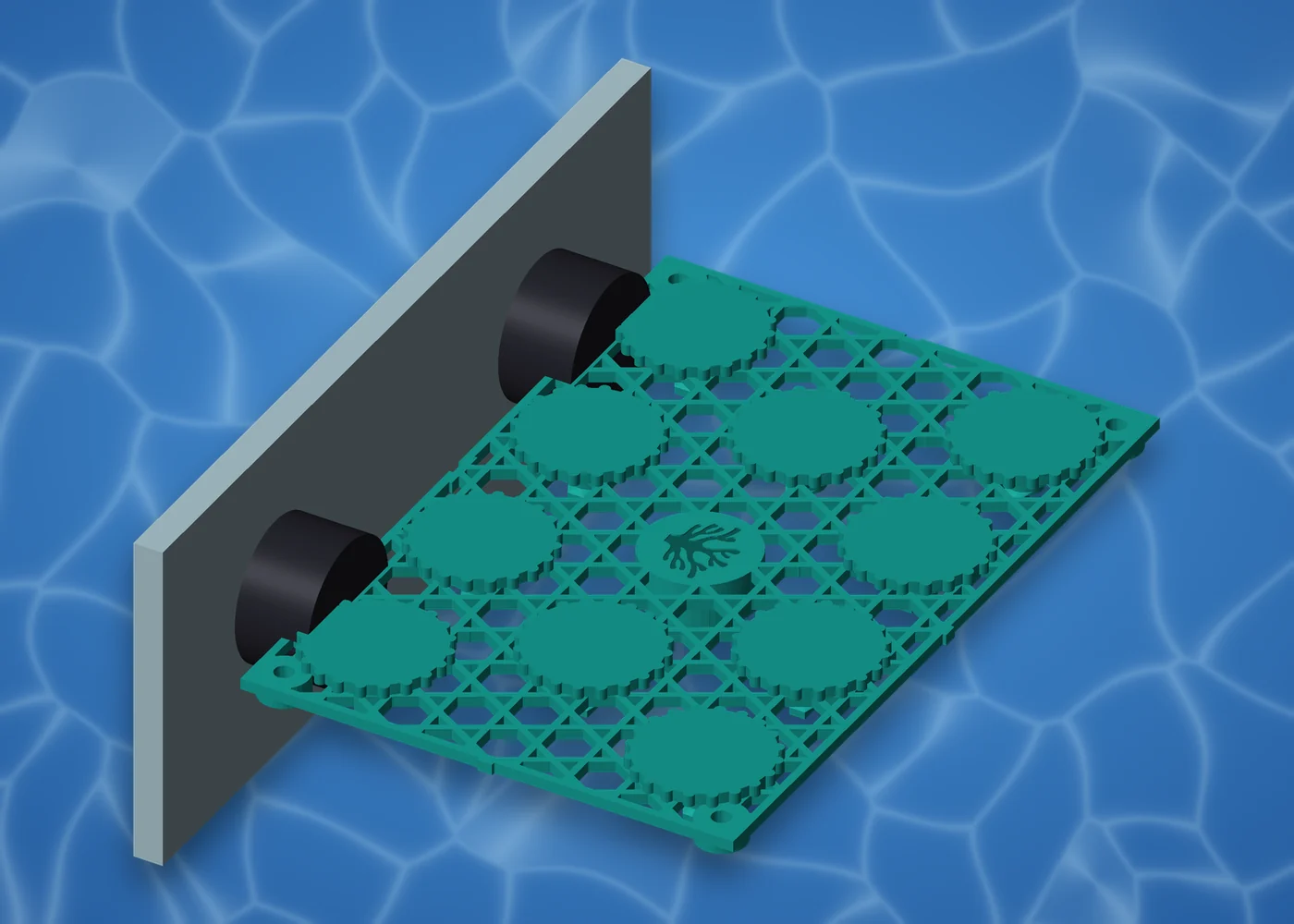
  • Sinks in, stays levelThe pointed tip pushes down through sand or gravel instead of sitting on top of it, so the plate stays level, and it rests on the bottom glass for a rack that stays put. Choose a leg taller than your sand is deep. Longer legs are available by custom order for deep sand bed (DSB) systems.
  • Less sand smotheredA narrow tip displaces far less sand than wide feet or PVC legs, so you don’t get compacted patches where waste can build up.
  • Open channels underneathSand-sifting fish, wrasses and clean-up crews can move, burrow and forage freely under the rack.
  • Tier your lightLegs from 25 to 85 mm let you set plates at different levels side by side: light-hungry SPS up high, lower-light LPS below. Double F brackets step tiers up 20 mm at a time. Corners and tiers
An AquaVoxel plate held on the aquarium glass as a shelf by two magnetic mounts
An XL10 plate held on the glass by two magnetic mounts
ADVANTAGE 04

Floating magnetic mounts with sealed N52 magnets

Turn any plate into a shelf on the glass and free up your sand bed.
  • N52 neodymiumTop-grade N52 magnets hold coral shelves level on thick glass, even as colonies grow and wavemakers push hard.
  • Fully sealed in PETGMany magnetic mounts rely on rubber or thin epoxy coatings that can crack, letting the magnet corrode inside your tank. AquaVoxel magnets are sealed inside a watertight PETG housing.
  • Reef-safe materialPETG is inert in saltwater and holds up under modern reef lighting.
  • Vertical displaysClear the sand bed and build clean, striking frag displays on the back or side glass.
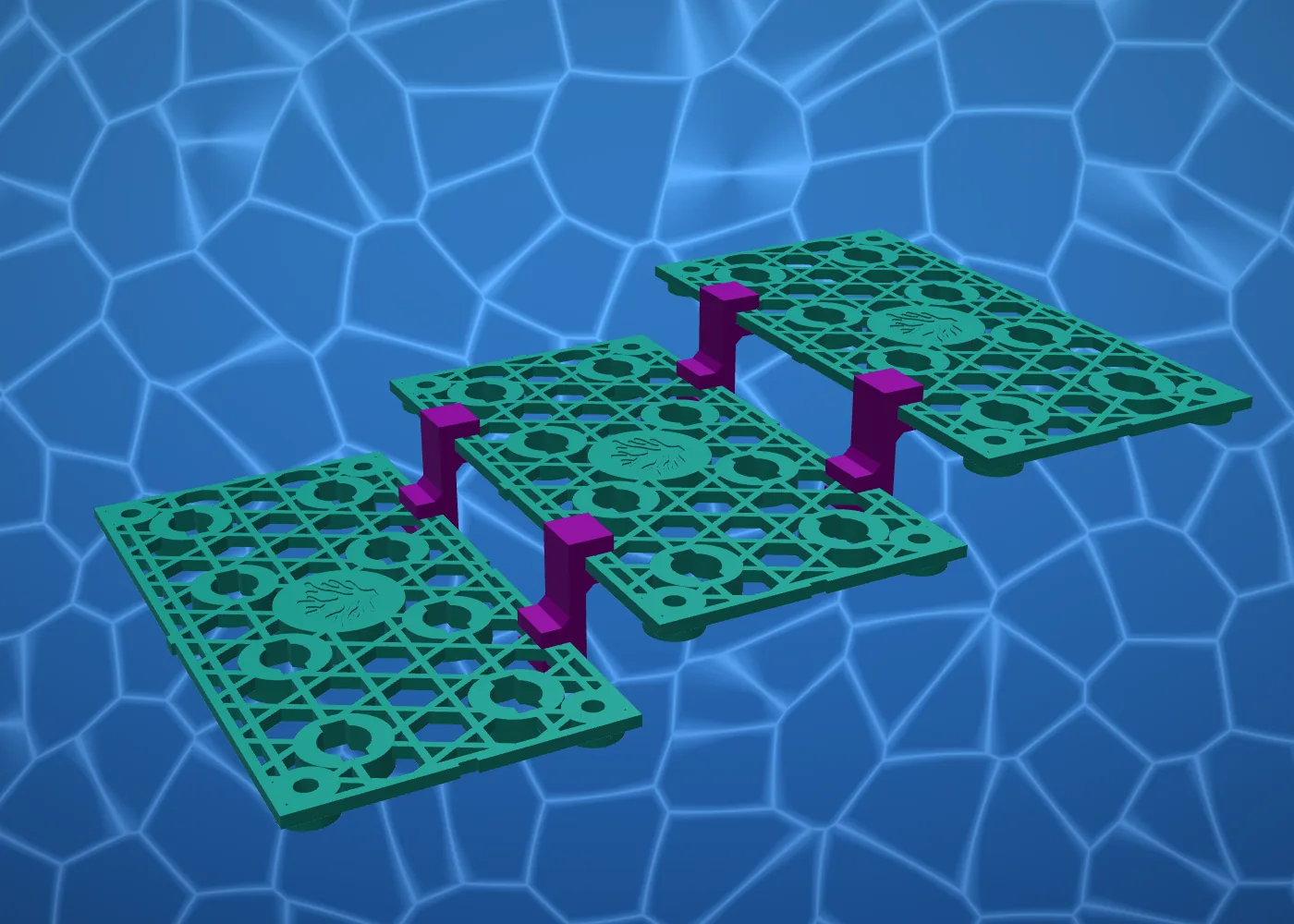
Three AquaVoxel Std8 plates stepping up in tiers on Double F brackets, each offset from the one below
Three Std8 tiers on Double F brackets
ADVANTAGE 05

Corners and tiers: more ways to build

Six plate sizes, a corner plate for each, tiers, legs from 25 to 85mm and magnetic glass mounts, all in five colors. Build the rack your tank needs instead of the one a box came with.

  • Corner plates for every sizeA square corner plate and one 3-way connector run a rack along two walls of the tank as one rigid piece, so the corner isn’t wasted space.
  • Tiers with no overlapDouble F brackets hold each plate 20mm above the last and off to the side. No rack sits over the tier below it, so every frag gets full light and room to grow.
  • Cleaner lower tiersBecause the tiers are offset, detritus from above falls past the tier below instead of settling on its frags.
  • On sand or on the glassHang tiers from magnetic mounts, or stand them on the sand bed with tier legs 20mm longer for each step up.
SIDE BY SIDE

How AquaVoxel compares.

AquaVoxel against the two most common alternatives: eggcrate or DIY racks, and flat acrylic or standard 3D-printed racks.

FeatureEggcrate / DIYFlat acrylic / standard printsAquaVoxel
Frag securityLoose fit; plugs tip over.Most rely on gravity; snails and strong flow can knock frags loose.Zero-drop 90° twist-lock.
Water flowGrid traps hair algae and detritus.Solid slab blocks flow and creates dead zones.Open hexagonal framework water passes through.
Substrate impactPVC or acrylic legs cover sand patches.Rests flat on the sand, trapping detritus underneath.Pointed legs sink through sand or gravel to the glass, so plates stay level.
Magnet safetyNo mounting option.Quality varies; coated magnets can crack and rust over time.N52 magnets fully sealed in watertight PETG.
ScalabilityCut new pieces; flimsy support.Mostly fixed sizes that don’t link together.Same-size plates link at every corner, from a Nano8 array to an 8 ft raceway.
Plug fitOnly whatever hole size you cut.Fixed holes; tight fits can snap fragile coral bases.Takes standard 3/8-inch plugs; AquaVoxel plugs clip down to fit standard racks.
Corners & tiersCut and stack pieces by hand.Usually one flat level; tank corners left empty.Corner plates for every size, and Double F tiers with no rack over the tier below.
SWITCHING IS PAINLESS

Keep the plugs you already own.

You don’t have to re-plug your collection or throw out your racks. AquaVoxel works alongside what’s already in your tank, so you can switch one plate at a time.

01 — KEEP YOUR PLUGS

Your frags drop right in

Std8, LG6, LG14, XL10 and XL26 plates take most standard frag plugs with a 3/8-inch (9.5 mm) stem. The 11.1 mm socket is a snugger fit than a typical 1/2-inch rack hole.

02 — UPGRADE AS YOU FRAG

Lock in new cuttings

Mount new frags on AquaVoxel twist-lock plugs as you cut them. Your collection moves over one frag at a time, with no big upfront cost.

03 — KEEP YOUR OLD RACKS

Both systems share a tank

Clip the locking ears off an AquaVoxel plug and it fits standard 1/2-inch rack holes and eggcrate, so old racks stay useful.

Will it fit?

PlugGoes intoFit
Standard plug, 3/8-inch (9.5 mm) stemAny AquaVoxel plate except the Nano8Yes. Sits like any rack; switch to an AquaVoxel plug to add the lock.
Standard plug, 1/2-inch (12.7 mm) stemAquaVoxel plateNo. Too wide for the socket. Keep these in your current rack.
Any standard plugAquaVoxel Nano8 plateNo. Nano8 plates take 19.05 mm AquaVoxel plugs only.
AquaVoxel 25.4 or 38.1 mm plug, ears clippedRack with 1/2-inch holes, or eggcrateYes. The 9.8 mm stem drops in like a standard plug.
Plug head sizePlate spacingUp to 25.4 mm (1-inch) heads on Std8, LG14 and XL26; up to 38.1 mm heads on LG6 and XL10.

Stem sizes vary between plug brands. If you’re unsure, measure the stem: 10 mm or less will fit.

“Reef-safe” is a strict engineering specification here, not a marketing buzzword.

Every AquaVoxel component is developed, physically tested and refined in real saltwater, not just on a computer screen. From the 0.65 mm radial plug clearance to the universal friction-fit leg bosses, every detail is dimensioned to fit precisely and built to stay put for the life of your reef.

Explore the System Commercial Systems